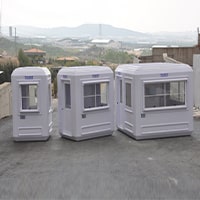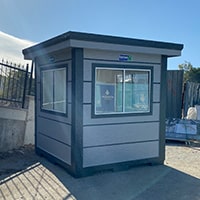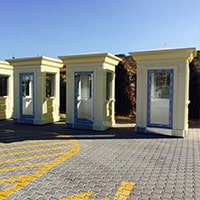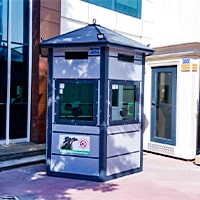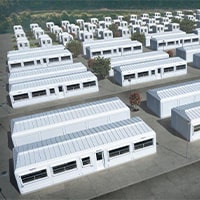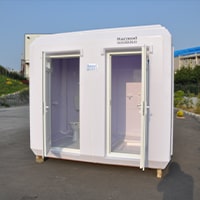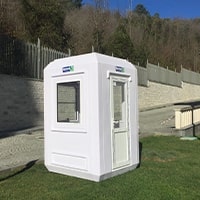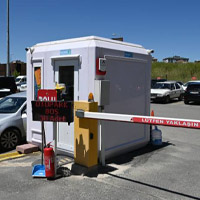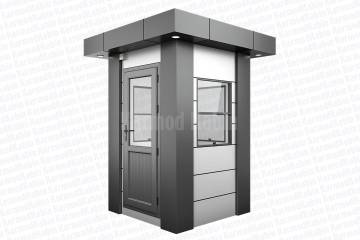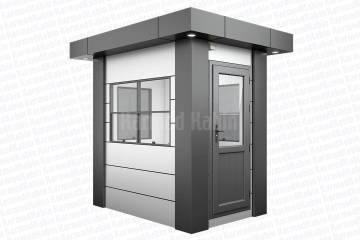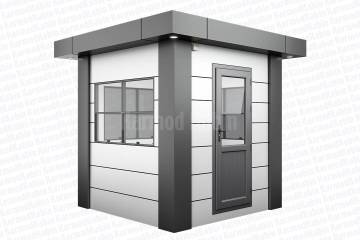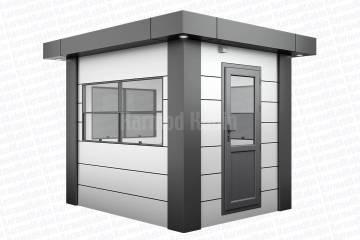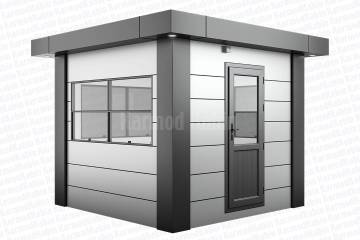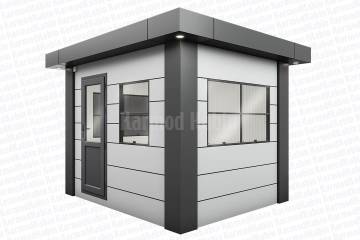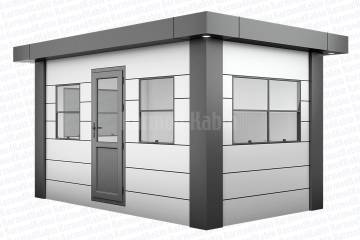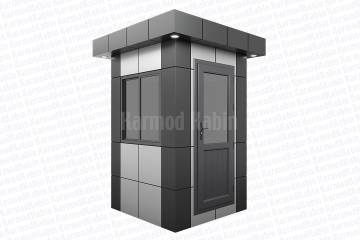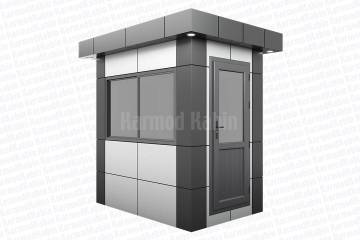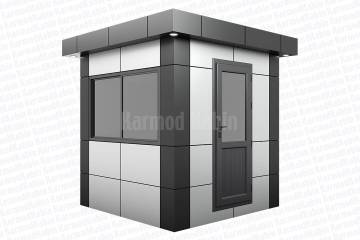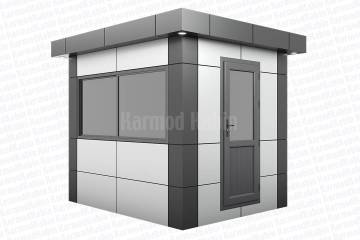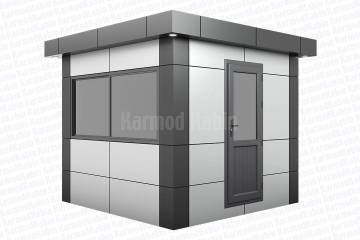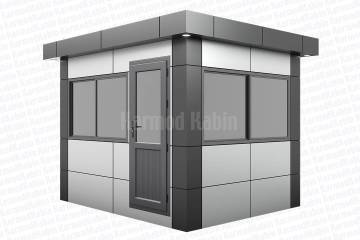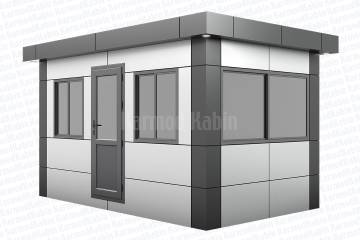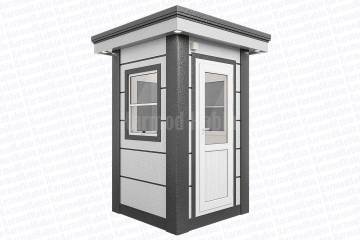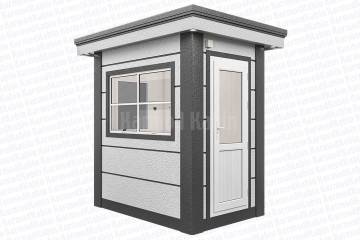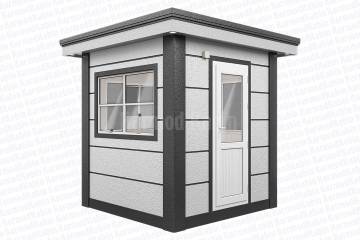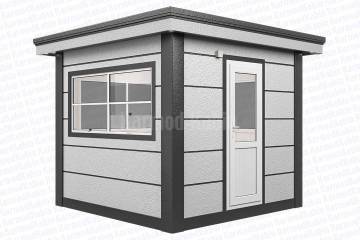

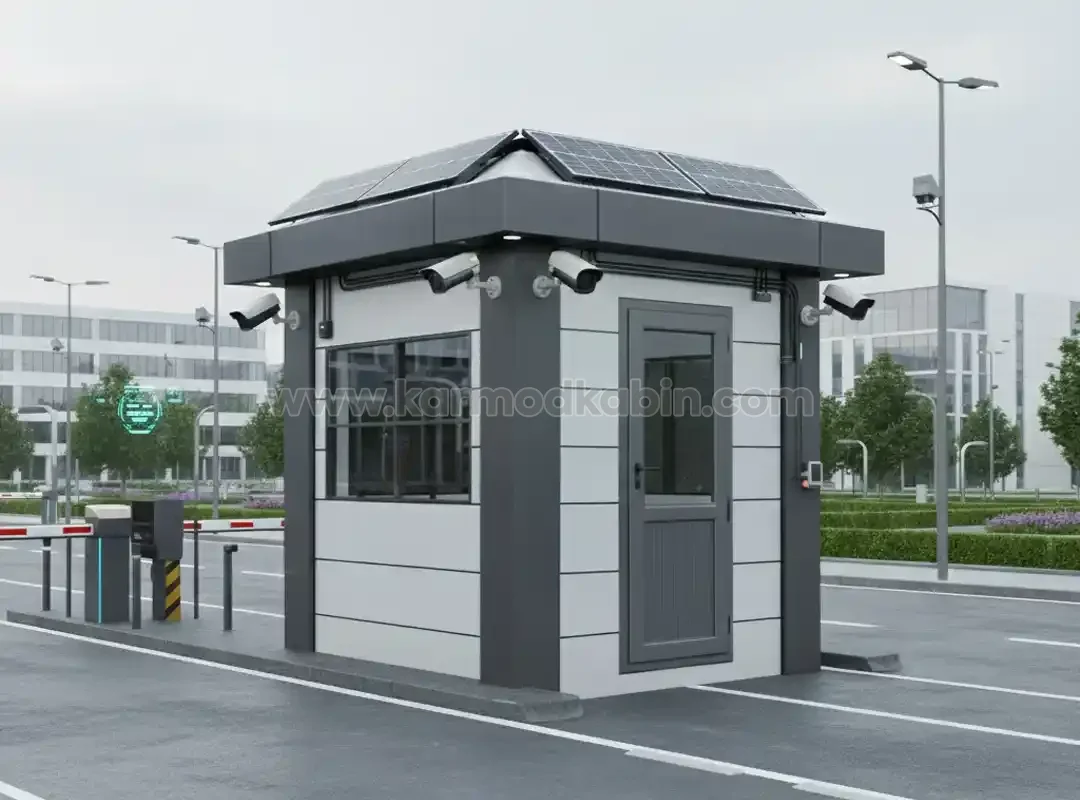
The security industry is experiencing one of the fastest transformations in its history. What was once a simple guard post made of metal and glass has evolved into a highly connected, data-driven, and intelligent security unit. Smart guard huts represent this shift - combining architecture, automation, and artificial intelligence to redefine how access, surveillance, and communication are managed.
As technology continues to merge with infrastructure, guard huts are no longer passive enclosures but active nodes in a broader security network. They now collect and analyze information, communicate with command centers, and even make real-time decisions based on artificial intelligence and predictive analytics. This integration not only increases efficiency but also transforms the role of human security personnel into supervisors of intelligent systems rather than manual operators.
The rise of smart infrastructure has blurred the boundaries between physical and digital security. Guard huts, once static checkpoints, are now digital gateways - capable of identifying individuals, scanning vehicles, and analyzing behavioral patterns in real time.
Smart systems reduce response time by automatically detecting irregularities and sending alerts through interconnected platforms. For example, a modern security hut can trigger a gate closure, notify central management, and record incident data simultaneously. By integrating technology into the very fabric of security operations, these huts form the foundation of intelligent perimeter management - merging human presence with automated precision.
Traditional guard huts relied heavily on manual processes - checking IDs, recording entries on paper, and relying on radios for communication. Smart guard huts, by contrast, are designed for predictive control and autonomous operation. Sensors, scanners, and AI-driven software manage most tasks automatically, while guards oversee system dashboards that provide situational awareness.
This evolution brings both speed and reliability. Instead of reactive decision-making, smart systems analyze environmental data and detect anomalies before they become threats. The result is a streamlined workflow that improves safety, lowers costs, and empowers human operators to focus on judgment and coordination rather than repetitive tasks.
The new generation of guard huts depends on an ecosystem of interconnected technologies. These innovations transform them from static shelters into dynamic digital command units:
Together, these technologies create a seamless security ecosystem that operates intelligently, efficiently, and autonomously.
IoT integration allows every sensor, camera, and door mechanism within the guard hut to communicate seamlessly. Each element - from motion detectors to access readers - generates data that can be analyzed to detect patterns or anomalies. For example, if a door is forced open or an unusual movement occurs near the perimeter, the IoT system automatically alerts both the guard and the control center.
This constant connectivity enhances transparency and accountability. Energy usage, equipment health, and environmental data can also be monitored remotely, making IoT not just a tool for security but also for operational optimization. IoT-enabled huts mark the transition from passive supervision to intelligent system management.
AI integration in guard huts revolutionizes how surveillance operates. With the help of computer vision and machine learning, AI-powered cameras can distinguish between normal activity and potential threats - identifying humans, vehicles, or even unusual movement patterns.
AI systems continuously learn from historical data, improving detection accuracy over time. They can predict high-risk periods, monitor crowd density, and flag suspicious behavior before incidents occur. By combining artificial intelligence with human intuition, modern guard huts achieve a level of predictive security once considered science fiction.
Smart guard huts rely on cloud and edge computing to process vast amounts of data efficiently. Edge devices analyze immediate information locally - such as video feeds or biometric scans - reducing latency and ensuring faster response. Meanwhile, cloud storage provides centralized access to long-term records, logs, and analytics.
This dual-layer approach provides the best of both worlds: local responsiveness and global intelligence. It ensures uninterrupted monitoring, even during internet outages, while keeping all systems synchronized and up-to-date. Cloud-based dashboards allow administrators to access live feeds, alerts, and reports from any device, creating a fully connected security network.
With 5G, the limitations of traditional connectivity disappear. Guard huts equipped with 5G-enabled routers can transmit ultra-high-definition video streams without delay. Instant communication between multiple checkpoints and central servers ensures that no event goes unnoticed or unrecorded.
The increased bandwidth of 5G also supports more devices - from surveillance cameras to smart locks - operating simultaneously without interference. This level of connectivity turns each hut into a real-time surveillance command post, capable of processing and relaying information in milliseconds.
Future-ready guard huts combine intelligence with sustainability. Energy efficiency is no longer optional - it’s integral to modern design.
Smart energy integration not only lowers costs but also supports global sustainability goals - an increasingly important factor in modern infrastructure planning.
Access control is at the heart of every security operation, and smart guard huts elevate it to new levels of precision. RFID badges, biometric scanners, and facial recognition systems work together to verify identity within seconds. Unlike manual checks, these systems are nearly error-free and record every transaction digitally for audit purposes.
Integration with databases allows seamless verification - employees, contractors, and visitors can be identified instantly. In high-security areas, two-step verification combining fingerprint and facial recognition ensures that only authorized personnel can enter. These technologies provide not just security, but also traceability and accountability.
As guard huts become smarter, they also become more connected - which means cybersecurity is paramount.
By integrating these protective measures, smart guard huts ensure digital safety matches physical security, creating a fully secured operational ecosystem.
While technology leads innovation, human expertise remains irreplaceable. Smart systems are designed to assist, not replace guards - providing data, predictions, and visual alerts that enhance decision-making. Guards can focus on strategic oversight, coordination, and response rather than routine checks.
Human–machine collaboration also improves morale. Automated systems handle tedious or repetitive tasks, allowing personnel to operate more efficiently. By empowering workers with intelligent tools, smart guard huts transform security from reactive control into proactive management.
One of the most significant benefits of smart technology is the ability to detect potential failures before they happen. Predictive maintenance uses sensors and AI algorithms to monitor component performance - from HVAC systems to camera lenses - and automatically alert operators when something requires attention.
This not only prevents costly downtime but extends the lifespan of equipment. Real-time diagnostics can even schedule maintenance tasks automatically, ensuring continuous operation and reducing long-term costs. Smart huts are thus self-aware structures, capable of managing their own upkeep.
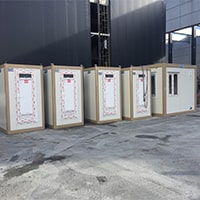
The future of guard huts lies in modular digital integration. Prefabricated sections allow for flexible configuration - a cabin can be expanded or restructured depending on site needs - while digital infrastructure ensures that new components connect effortlessly to existing systems.
This adaptability makes it easier to upgrade older models. Adding new technologies such as sensors, communication hubs, or AI processors doesn’t require a full rebuild; it’s as simple as replacing or adding modules. As modular architecture converges with digital intelligence, the result is a structure that evolves as fast as technology itself.
Looking ahead, the next generation of guard huts will interact directly with autonomous technologies. AI-driven analytics will coordinate with drones to monitor large areas, analyzing movement patterns from above while ground units respond in real time. Autonomous patrol robots may soon collaborate with stationary huts to cover wider perimeters more efficiently.
Automation will also enhance access control - using AI to adjust gate traffic based on time of day, crowd density, or risk levels. Smart guard huts will no longer just monitor; they will orchestrate entire site operations, creating a seamless integration between machine precision and human insight.
Embrace the future of security with intelligent, connected, and energy-efficient guard huts that transform how safety is managed. Contact us today to design a smart guard hut system that combines innovation, reliability, and performance for your facility.

Leading manufacturer in modular cabin since 1986.
 EN
EN