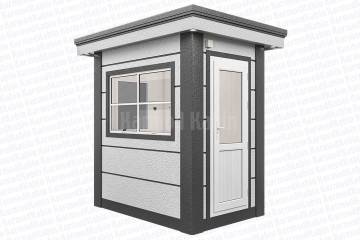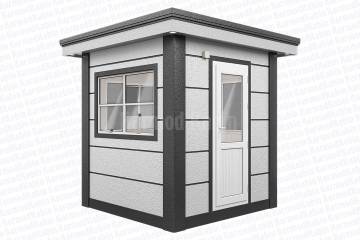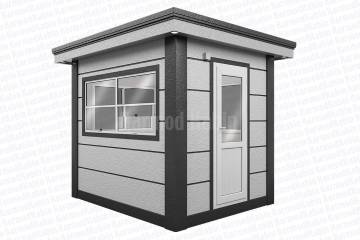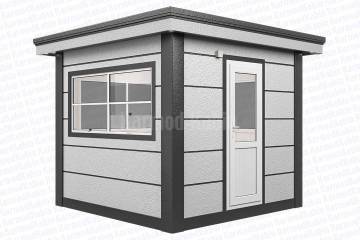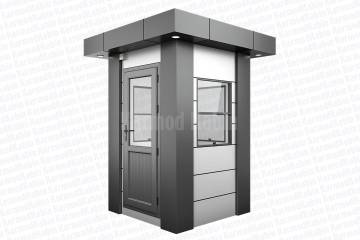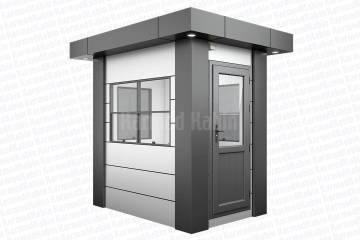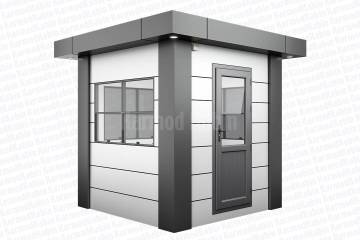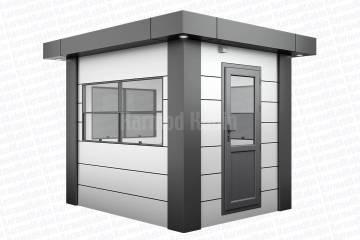

Energy efficiency and sustainability have become the cornerstones of modern infrastructure. As organizations worldwide move toward reducing their carbon footprint, solar-powered guard huts have emerged as a practical and eco-friendly alternative to conventional, grid-dependent security structures. These systems combine renewable energy with modern engineering, providing a continuous power supply even in remote or off-grid locations where traditional electricity is unreliable or unavailable.
Unlike standard guard huts that rely solely on external power, solar units integrate photovoltaic panels, battery banks, and intelligent inverters to create a self-sustaining energy loop. This means guards can operate lights, ventilation, communication devices, and monitoring systems entirely through renewable sources-ensuring uninterrupted protection while supporting global sustainability goals.
Industrial and construction sectors consume significant amounts of energy through lighting, communication, and security systems. In many temporary or remote worksites, diesel generators have long been used to power guard cabins-resulting in high operational costs and harmful CO₂ emissions. The emergence of solar-powered guard huts represents a crucial shift toward cleaner, more efficient energy models.
The motivation is not only environmental but also financial. Solar energy drastically reduces monthly energy bills and eliminates dependency on fossil fuels. For companies implementing ESG (Environmental, Social, and Governance) frameworks, these structures symbolize responsible resource management. The transition to solar guard huts reflects a growing commitment to sustainable development and carbon-neutral operations across multiple industries.
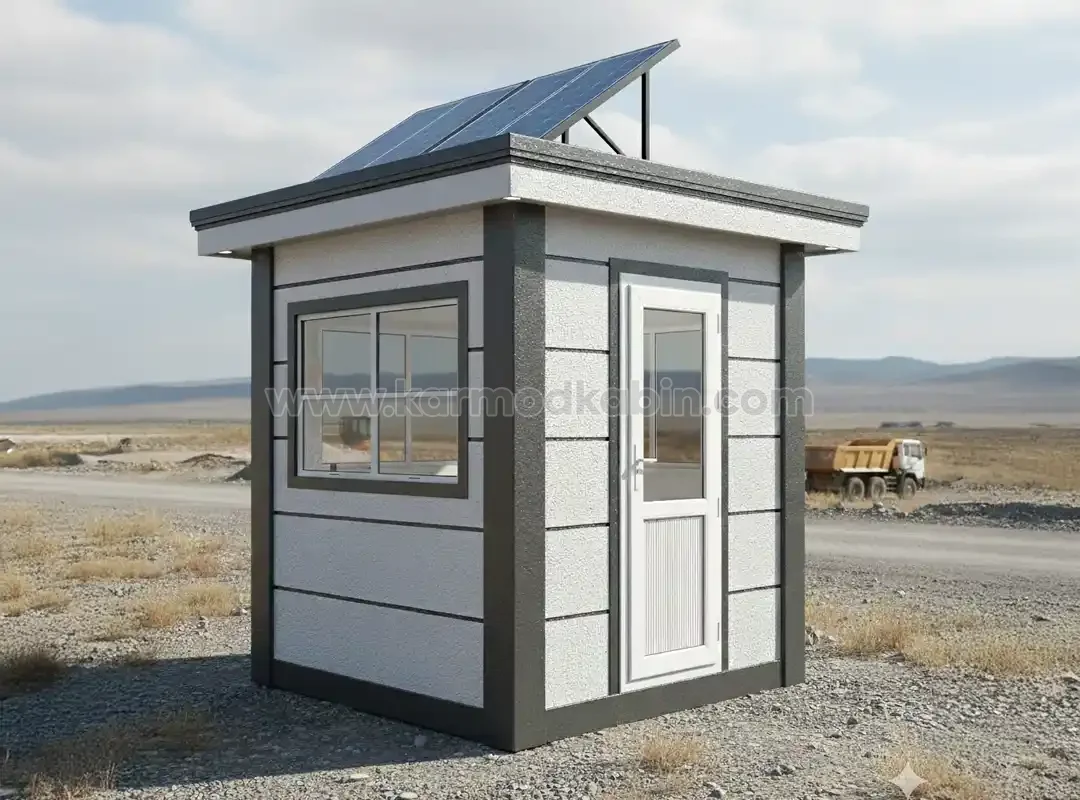
Integrating solar panels into the design of a guard hut fundamentally changes its structure and performance. The roof or upper façade is fitted with high-efficiency photovoltaic (PV) modules-either monocrystalline or polycrystalline types-mounted at optimized angles for maximum sunlight capture. The generated DC electricity flows into a charge controller, which regulates the current and prevents battery overcharging.
Energy is then stored in deep-cycle batteries-commonly LiFePO₄ (lithium iron phosphate) or GEL types-known for their long lifespan and temperature resistance. The stored energy is later converted by an inverter into AC power suitable for internal electrical systems, including lighting, computers, air conditioning, and surveillance equipment. This smart integration ensures 24-hour energy autonomy, even during periods of limited sunlight.
Every solar guard hut operates through an interconnected system of electrical and mechanical components designed for durability and efficiency. The primary elements include:
This integrated design transforms a simple guard cabin into a high-performance, energy-independent workstation suitable for continuous operation.
One of the greatest benefits of solar-powered guard huts is total energy independence. In remote construction sites, mining fields, or agricultural areas, the cost of connecting to the grid can be prohibitively high. Solar installations remove that dependency, allowing operations to run autonomously.
While the initial investment may be higher than standard cabins, the long-term financial return is substantial. With virtually zero electricity bills and minimal maintenance, most systems achieve full ROI within three to five years. Furthermore, companies gain protection against rising energy prices and enjoy stable operating costs for decades.
A typical solar guard hut with a 1.5 kW PV array can save approximately 1.2 tons of CO₂ emissions per year compared to a diesel-powered equivalent. Over a 20-year lifespan, this equates to more than 24 tons of emissions avoided, making it a significant step toward carbon neutrality.
Beyond the numbers, solar energy minimizes noise pollution, air contamination, and fuel transport risks. It aligns with international sustainability standards such as ISO 14001 and contributes directly to corporate environmental responsibility goals.
Solar guard huts are engineered to perform efficiently in a wide range of climates:
These design optimizations guarantee reliable operation worldwide, ensuring continuous power generation under varying atmospheric and geographical conditions.
Modern guard huts are no longer isolated units-they are part of connected ecosystems. Through IoT integration, solar guard huts can communicate energy data, operational status, and security footage directly to a central monitoring platform. CCTV systems, motion sensors, and lighting can be programmed to operate only when necessary, optimizing energy consumption.
Smart controllers allow remote management through cloud dashboards or mobile applications, giving managers full visibility over security operations and energy usage. This digital integration marks a shift from passive monitoring to active, data-driven site management.
The lifespan of a solar guard hut largely depends on its components and maintenance routine. High-quality PV modules have a typical warranty of 25 years, maintaining 80-85% efficiency at the end of that period. Batteries may require replacement every 8-12 years depending on usage cycles.
Maintenance involves periodic cleaning of panels to remove dust and bird droppings, checking electrical connections, and updating firmware in smart controllers. Most systems are built to IP65 or IP67 protection classes, ensuring resistance against rain, dust, and temperature fluctuations. These factors collectively extend system longevity and performance reliability.
These advantages position solar-powered guard huts as the future standard for both temporary and permanent security installations.
Solar guard huts are already being used in a wide variety of industries worldwide. In mining regions of Australia and Chile, they serve as checkpoint posts where grid power is absent. Construction firms in Southern Europe use solar cabins to power lighting, surveillance, and access systems throughout night shifts. In oil exploration fields, hybrid models combining solar and wind energy ensure uninterrupted monitoring in isolated desert zones.
Even municipalities adopt these solutions for eco-friendly public security booths, aligning urban safety with sustainability initiatives. The diversity of applications demonstrates that solar guard huts are not experimental prototypes-they are proven, scalable technologies for modern security infrastructure.
A solar guard hut is a long-term investment. Panels have an average service life of over 25 years, while structures made from galvanized steel or aluminum maintain integrity for decades. With proper component replacements (batteries, inverters), the system can easily exceed 30 years of functional lifespan.
Efficiency levels typically range between 17-21%, depending on module type and installation angle. When combined with LED lighting and low-power electronics, a standard 1.5-2.0 kW system can sustain full operation for 24 hours a day. Over its lifetime, it can save more than 50,000 kWh of grid energy, paying back its investment multiple times over.
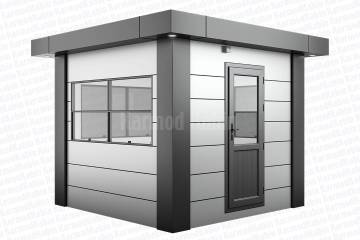
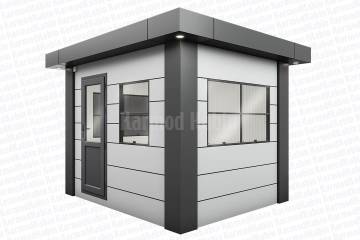
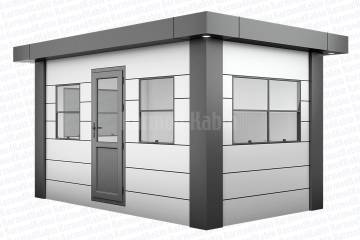
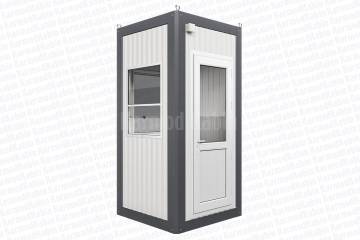
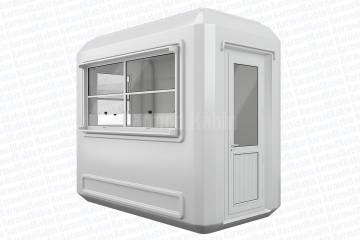
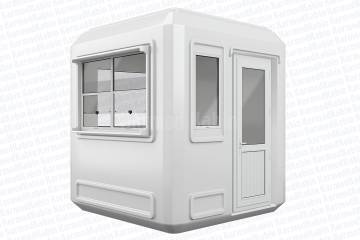
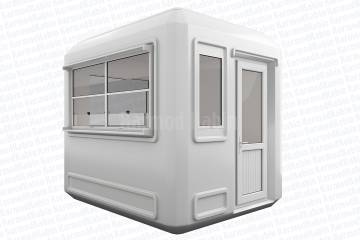
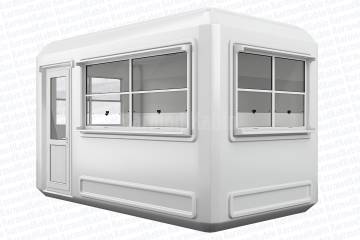
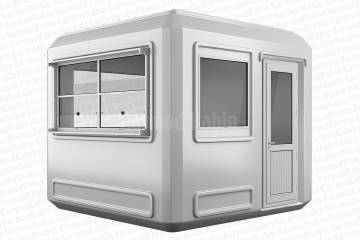
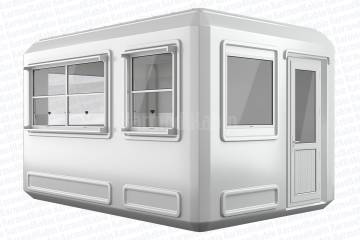
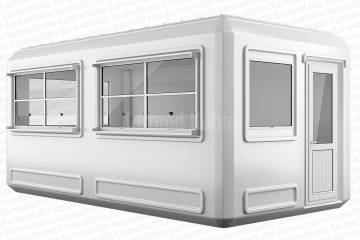
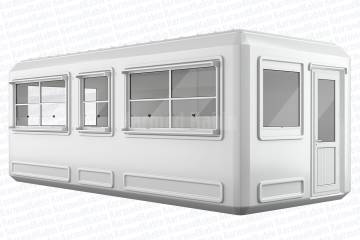
Select the solar model that matches your energy and space requirements.
Switch to clean, self-sufficient, and intelligent security solutions. Contact us today to get your customized solar-powered guard hut and start saving energy while protecting your site responsibly.

Leading manufacturer in modular cabin since 1986.
 EN
EN