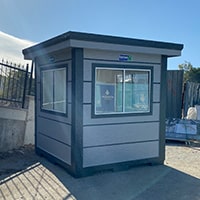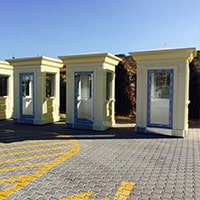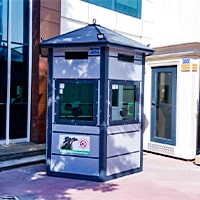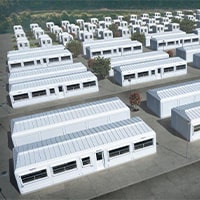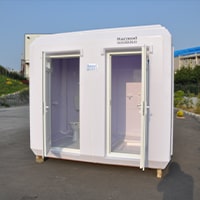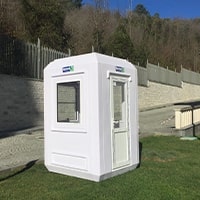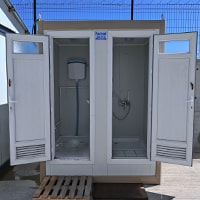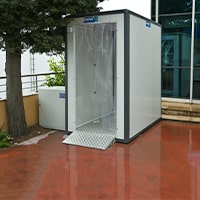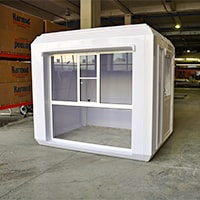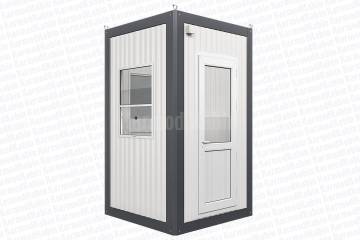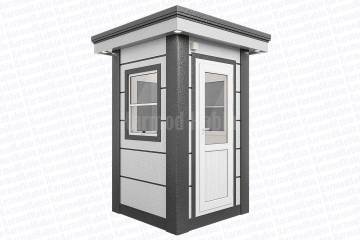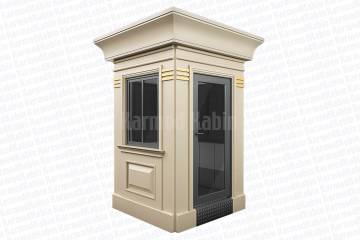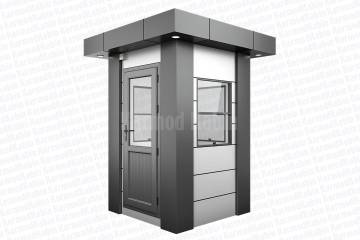
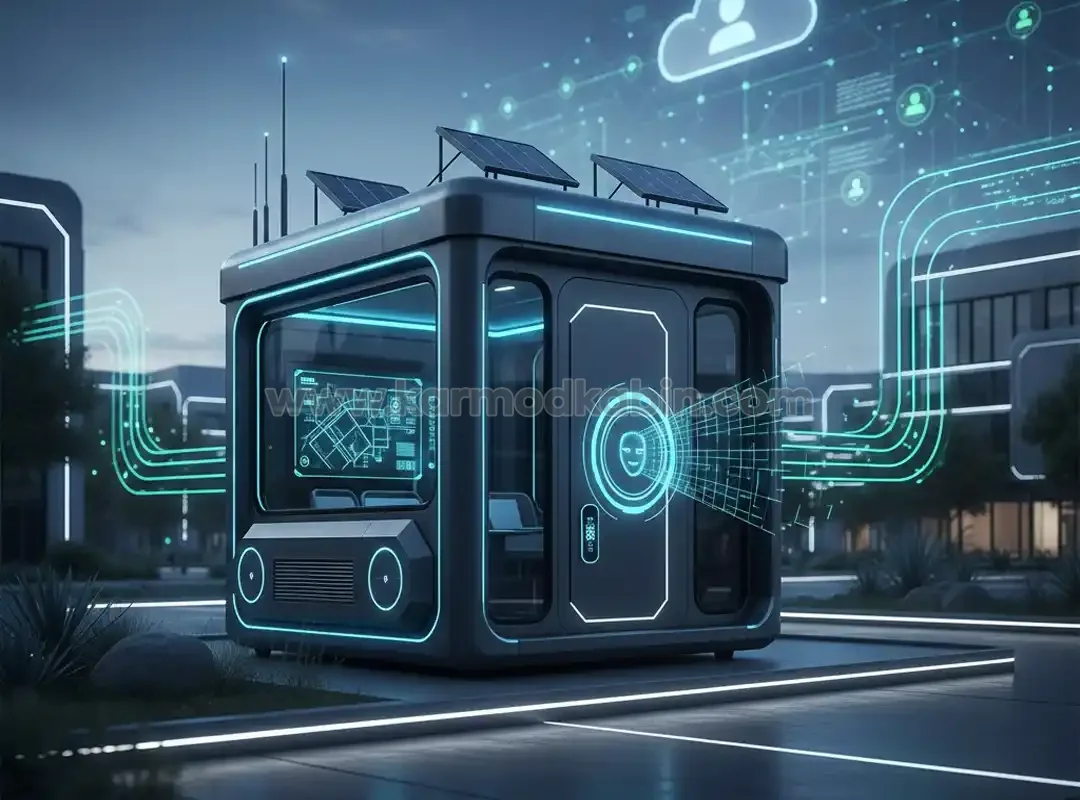
The security industry is evolving rapidly, and security cabins are no longer just small structures for guards-they have become intelligent control hubs equipped with the latest smart technologies. Modern cabins now integrate facial recognition systems, smart locks, and IoT-based monitoring networks, enabling seamless access control and real-time communication between personnel, devices, and management systems.
These innovations are transforming how businesses, institutions, and governments manage safety. A smart security cabin can automatically identify authorized personnel, monitor environmental conditions, and transmit instant alerts to central systems in case of unusual activity. Combining advanced digital tools with durable, prefabricated construction creates a powerful balance between physical protection and technological intelligence. Security cabins are now part of the larger smart infrastructure ecosystem, ensuring faster response times, data-driven insights, and a new level of operational efficiency.
In the past, security cabins served a simple purpose-providing a sheltered space for personnel to monitor entry points. Today, they have evolved into smart command centers, equipped with advanced electronics and connected systems that enhance efficiency and safety. The shift toward digital transformation in physical security has led manufacturers to integrate technologies like facial recognition, smart locks, IoT connectivity, and AI-powered monitoring directly into the cabin’s infrastructure. This evolution enables guards and administrators to manage access, collect data, and monitor activity remotely with precision.
Smart technology not only improves operational control but also reduces human error. Features such as automated entry verification, motion-triggered alerts, and cloud-based reporting allow real-time decision-making without manual intervention. These cabins can be connected to company networks or central monitoring systems, creating a seamless link between on-site personnel and digital management platforms. The result is a new generation of intelligent, responsive, and self-sufficient security kiosks that redefine how organizations approach access control and perimeter protection.
The integration of facial recognition systems into modern security kiosks has completely changed how entry and identity verification are managed. Instead of relying on traditional keys, ID cards, or manual check-ins, facial recognition technology provides a fast, contactless, and highly secure access control method. This system uses high-resolution cameras and AI-powered software to analyze facial features and match them against a pre-approved database in seconds. As a result, only authorized individuals can enter restricted areas-reducing the risk of unauthorized access and improving operational efficiency.
Facial recognition doesn’t just enhance security; it also optimizes user experience and data management. Each entry event can be automatically logged, stored, and reviewed remotely, allowing companies to track movements and analyze visitor patterns for improved planning. Many modern systems also integrate temperature detection or mask recognition-especially useful in high-security or healthcare environments.
Key advantages of facial recognition in security cabins include:
By incorporating facial recognition, security cabins become more than just entry points-they evolve into intelligent, data-driven checkpoints that increase both safety and efficiency across facilities.
Smart locks are another key innovation transforming the functionality of modern security cabins. These advanced systems replace traditional mechanical locks with digital, wireless, and biometric mechanisms, offering higher control and reliability. By eliminating the need for physical keys-which can be lost, copied, or stolen-smart locks reduce security vulnerabilities and simplify access management. In high-traffic areas such as construction sites, industrial facilities, and gated communities, they provide fast, traceable entry without requiring manual supervision.
Smart locks can be customized to match the operational needs of each project. Some models operate via PIN codes or RFID cards, while others use fingerprint or mobile app verification. The most advanced systems combine these options with IoT connectivity, allowing remote control and real-time monitoring from central dashboards. When integrated with facial recognition or CCTV systems, smart locks become part of a fully synchronized smart access solution.
Main benefits of smart locks and keyless entry systems include:
By equipping cabins with smart locking systems, businesses gain real-time control, better accountability, and future-ready protection-turning every security cabin into an intelligent and connected entry hub.
The Internet of Things (IoT) has redefined how security cabins operate, transforming them into connected and intelligent units that communicate in real time with other systems. Through IoT integration, every device inside the cabin-such as cameras, locks, lighting, sensors, and alarms-can be linked to a centralized digital platform. This network allows administrators to monitor, analyze, and control multiple cabins across different locations from a single dashboard. IoT not only improves efficiency but also ensures proactive management by detecting issues before they become problems.
When combined with facial recognition and smart locks, IoT creates a seamless and automated security ecosystem. Data collected from access logs, environmental sensors, and surveillance cameras can be processed instantly, improving both situational awareness and decision-making. This kind of interconnectivity transforms the cabin from a passive structure into a dynamic part of the organization’s smart infrastructure.
Key benefits of IoT-integrated security cabins include:
IoT connectivity makes security cabins smarter, safer, and more responsive, ensuring that every component works together efficiently to deliver continuous protection with minimal human intervention.
Artificial intelligence (AI) and cloud-based management platforms are revolutionizing the way security cabins operate. By analyzing large volumes of data in real time, AI-driven systems can detect unusual patterns, predict potential threats, and automate responses faster than any manual operation. For example, if facial recognition detects repeated failed access attempts, AI can instantly trigger an alert, lock all entry points, or notify security personnel. When combined with cloud computing, this intelligence becomes accessible anywhere-allowing management teams to control, monitor, and update systems across multiple sites simultaneously.
Cloud platforms also make maintenance, software updates, and data storage easier and more secure. Instead of relying on on-site servers, all information from CCTV, smart locks, IoT sensors, and access logs is stored safely online, protected with encryption and multi-layered authentication. This not only enhances cybersecurity but also allows seamless scalability as operations expand.
Advantages of integrating AI and cloud-based systems include:
With these technologies, security cabins evolve into self-learning systems that continuously adapt to their environment-delivering unmatched precision, responsiveness, and reliability in modern access control.
As smart technologies advance, energy efficiency has become one of the main pillars of next-generation security cabin design. By integrating automated control systems, cabins can now regulate lighting, ventilation, and power consumption without manual input. Sensors measure interior temperature and occupancy, activating air-conditioning or lighting only when needed. Solar panels and smart inverters further reduce dependence on grid electricity, transforming security cabins into self-sustaining, eco-friendly structures that operate continuously while lowering costs.
Automation also improves reliability and user comfort. Systems linked through IoT allow the cabin to react intelligently to real-time situations-for instance, switching to backup power during an outage or activating emergency lighting when motion is detected after hours. These features minimize human error and ensure uninterrupted operation in critical environments such as industrial zones, ports, and government facilities.
Incorporating energy-efficient and automated systems is not just about sustainability-it’s about performance. Reduced energy consumption extends the life of internal components, decreases maintenance costs, and aligns your facility with international green-building standards. The result is a smart, responsive, and environmentally conscious security cabin that meets the evolving needs of modern safety management.
While the adoption of smart security cabin technology offers numerous advantages, it also introduces new challenges that must be addressed for safe and sustainable implementation. The biggest concerns revolve around data security, system integration, and maintenance. As cabins become more connected through IoT networks and cloud platforms, the risk of cyberattacks increases. Unauthorized access to a cabin’s control system could compromise not only its locks and cameras but also sensitive user data. Therefore, advanced cybersecurity protocols, such as encrypted communication, firewall protection, and multi-factor authentication, are essential.
Another challenge lies in ensuring that smart devices from different manufacturers work seamlessly together. Without standardization, systems can become incompatible or difficult to update. This is where international safety and performance standards play a vital role. Regulations such as ISO 27001 for information security, EN 50133 for access control systems, and IEC 62443 for industrial network security provide the framework to ensure that every smart cabin meets global expectations for safety, quality, and reliability.
By adhering to these standards and conducting regular audits, companies can confidently integrate AI, IoT, and smart locks into their cabins without sacrificing operational security. The future of smart cabins depends on not just innovation but also responsibility-building intelligent systems that are safe, secure, and compliant with international best practices.
The future of security cabins is being shaped by continuous advancements in AI, automation, and data connectivity, redefining how organizations approach access control and perimeter safety. Traditional guard booths will gradually evolve into autonomous security units, capable of operating with minimal human intervention. With facial recognition, smart locks, and IoT devices working together, future cabins will serve as the central nodes of intelligent security networks-communicating seamlessly with drones, surveillance systems, and command centers. This transformation will not only enhance protection but also significantly reduce operational costs and response times.
In the coming years, smart cabins will also integrate predictive analytics and behavioral recognition, allowing them to detect irregular activity before it escalates into a security incident. For instance, AI algorithms will analyze movement patterns, environmental data, and access histories to automatically adjust security protocols in real time. Moreover, sustainability will continue to play a major role: energy-efficient systems, recyclable materials, and solar power will become standard features in every new generation of modular guard booths.
Ultimately, the fusion of technology and modular design will make smart cabins an integral part of future-ready security ecosystems-delivering precision, sustainability, and intelligence in one compact structure.
The age of intelligent security infrastructure has arrived, and investing in a smart, connected security cabin is one of the most forward-thinking decisions a business can make. These next-generation cabins combine facial recognition, smart locking, IoT connectivity, and cloud integration to deliver unmatched protection and efficiency. Designed for 24/7 operation, they ensure seamless coordination between personnel, digital systems, and site management-all while reducing manpower needs and operational costs. Whether you operate in industrial facilities, logistics hubs, airports, or gated communities, a smart cabin provides the reliability, innovation, and long-term value today’s security demands require.
By working with a certified manufacturer, you can customize every detail of your cabin-from access control systems to energy-saving automation. Each unit is built to meet international standards, equipped with AI-based monitoring, remote management capability, and data security encryption. This is not just a structure-it’s an intelligent solution designed to evolve with your operations.
Why choose a smart, connected security cabin:
Contact us today to upgrade your security infrastructure with a smart, IoT-enabled cabin designed for the future.
Our innovative cabins combine technology, durability, and design-bringing intelligence and protection together in one powerful solution.
Leading manufacturer in modular cabin since 1986.
 EN
EN