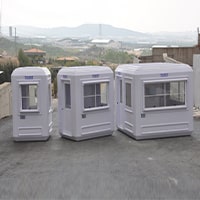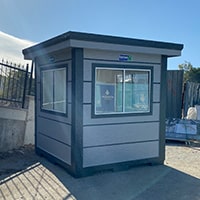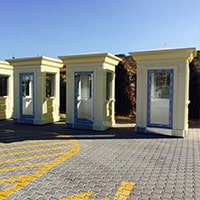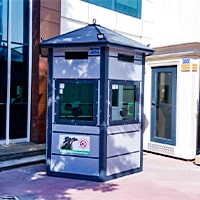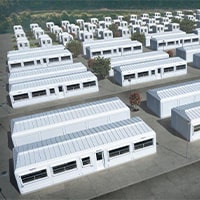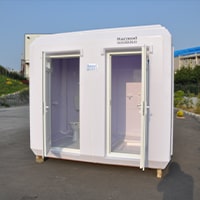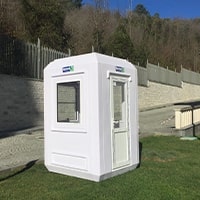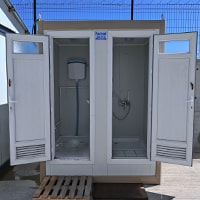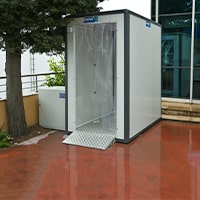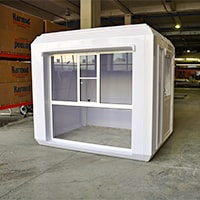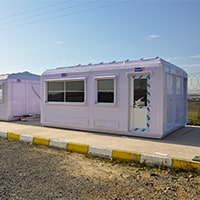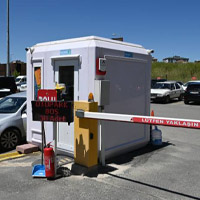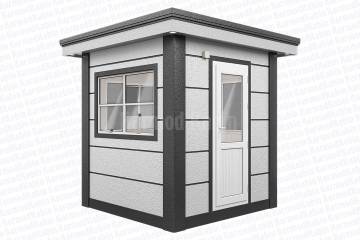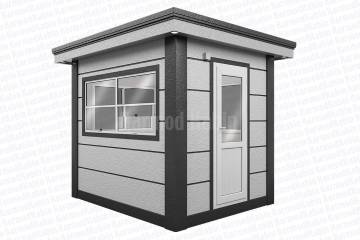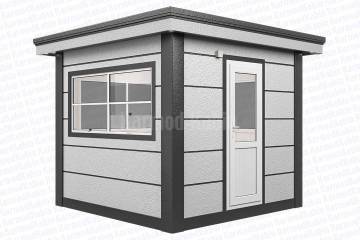

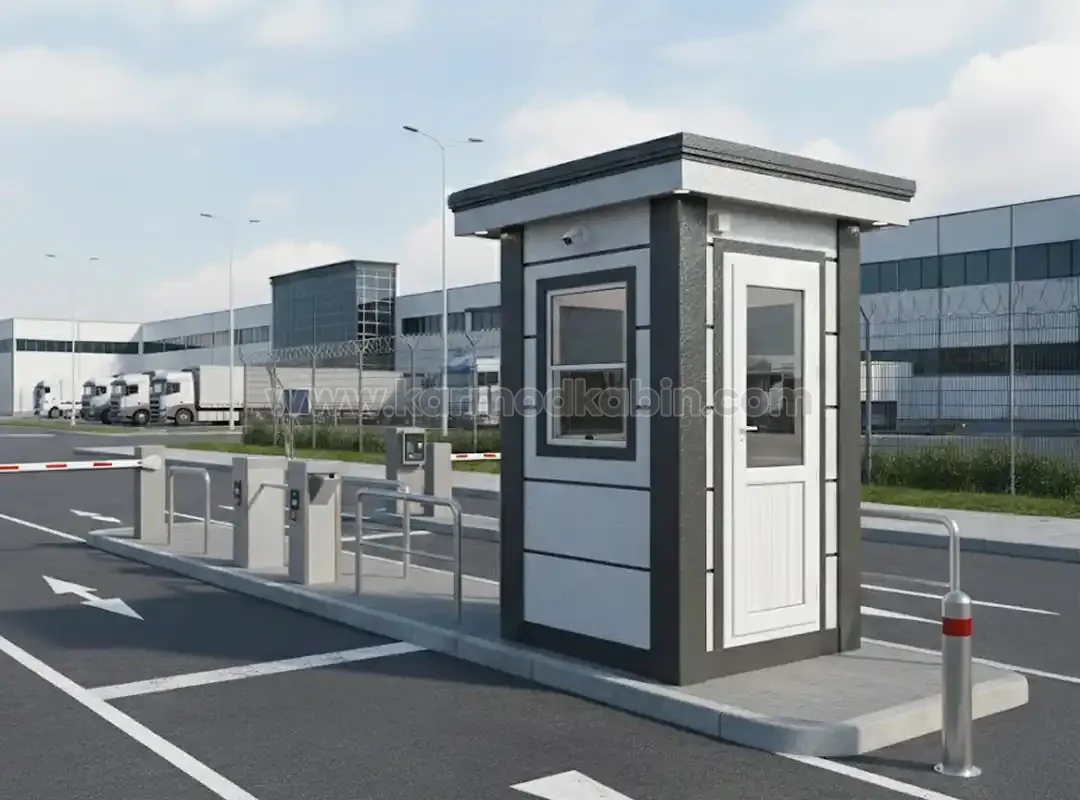
Highway toll booth kiosks and Access control is the first line of defense for any facility - the point where safety, order, and accountability intersect. In modern infrastructure, security huts are no longer just observation points; they are the nerve centers of controlled entry and exit. Whether at construction sites, industrial zones, airports, or logistics terminals, well-designed access control huts ensure that personnel, vehicles, and visitors enter and exit efficiently and securely.
A security hut’s success as an access control station depends on the balance between visibility, technology integration, and human-centered design. When properly planned, it serves as both a command post and a comfortable working environment for guards, ensuring smooth operations while maintaining maximum security coverage. In this guide, we’ll explore the key practices for designing, equipping, and maintaining access control huts that combine functionality with long-term reliability.
Security huts play a critical role in defining how people and vehicles move through controlled zones. These cabins act as decision points - where verification, authorization, and response occur in real time. They are strategically placed at facility entrances, parking areas, and restricted perimeters to serve as a physical checkpoint between secure and public zones.
The purpose extends far beyond simply “watching the gate.” Modern security huts collect data, communicate with central systems, and act as on-site command units. Their architecture must accommodate electronic access systems, communication networks, and emergency controls. As facilities grow larger and more complex, these structures become integral to maintaining security consistency across multiple access points.
Many organizations underestimate the importance of dedicated access control infrastructure. Without it, operations often rely on ad-hoc solutions - temporary tents, vehicles, or unstructured checkpoints - which lack professional equipment, visibility, and compliance with safety standards. A well-constructed guard hut provides a stable environment for critical operations like identity verification, record keeping, and incident response.
Dedicated security huts also offer resilience. With durable materials, weatherproof insulation, and ergonomic layouts, they ensure guards can perform effectively in all conditions - from freezing winters to humid industrial zones. Beyond safety, these structures also signal professionalism. For visitors and employees alike, the presence of a well-designed security hut conveys that a facility is organized, compliant, and serious about protection.
Effective access management relies on intelligent spatial and visual design. A guard hut should offer clear visibility of all entry and exit lanes while minimizing blind spots. Window placement, internal layout, and orientation are vital - guards must maintain a direct line of sight to barriers, turnstiles, and vehicle lanes.
Interior organization is equally important. Workstations should accommodate computers, monitors, scanners, and radios without clutter. Temperature control, ventilation, and lighting systems must support long working hours. Well-designed interiors enable guards to multitask smoothly - monitoring screens, speaking to visitors, and managing systems - all within a confined yet efficient workspace. When form and function work together, the result is faster throughput, fewer errors, and better user experience at every checkpoint.
Modern access control huts are equipped with advanced engineering features to support both human and digital operations. The following components are essential for optimal performance:
Each of these elements transforms a simple guard hut into a complete access control hub - blending structural security with operational intelligence.
Technology is the backbone of modern access control operations. A security hut designed for this purpose must accommodate multiple digital systems simultaneously. RFID card readers streamline employee and vehicle identification, while biometric verification - fingerprint or facial recognition - prevents unauthorized access. QR-based visitor systems offer additional convenience for temporary guests.
Internally, CCTV monitors, data loggers, and Wi-Fi routers ensure that real-time visuals and logs are instantly transmitted to central command. Advanced setups integrate with cloud-based access management software, enabling supervisors to review entries, time-stamp events, and audit security protocols remotely. By combining traditional security presence with digital precision, technology-equipped huts become an intelligent extension of a facility’s overall protection network.
Preparedness defines professionalism in access control environments. Security huts must support quick, reliable emergency response protocols through carefully integrated systems:
These protocols transform a guard hut from a passive structure into an active safety unit, ensuring not only prevention but rapid reaction in critical moments.
The efficiency of an access control point depends on seamless traffic coordination. The hut’s placement relative to gates, barriers, and turnstiles determines how effectively guards can process both vehicles and pedestrians. For example, at construction sites, dual-lane setups allow one side for staff entry and another for deliveries, reducing congestion during peak hours.
Design should prioritize visibility and proximity. Guards must have clear lines of sight to control mechanisms, ensuring quick manual override in case of system malfunction. The surrounding area should allow safe pedestrian paths, avoiding collision points with vehicles. Proper signage, lighting, and ground markings enhance operational flow while maintaining compliance with safety regulations.
Even the most advanced access control systems depend on well-trained personnel. Guards should be familiar with both manual and automated access processes, including RFID log management, visitor screening, and emergency responses. Training programs should also emphasize communication skills, situational awareness, and adherence to confidentiality policies.
Standard operating procedures (SOPs) define consistency. A properly trained guard understands how to manage peak-hour queues, identify suspicious behavior, and record incidents accurately. Regular drills, audits, and refresher sessions keep teams updated on technological changes and reinforce best practices. A well-trained team ensures that the technology inside the hut is used to its full potential.
Reliability is the cornerstone of access control systems. Regular maintenance ensures that both the physical structure and integrated electronics remain in peak condition:
By treating maintenance as part of the operational process rather than an afterthought, organizations ensure 24/7 functionality and long-term asset preservation.
Security huts serve as critical infrastructure across a range of industries. In construction zones, they manage worker entry, material tracking, and visitor registration. In corporate campuses, they function as elegant reception-style control points with integrated digital systems. Airports and ports use them for customs inspection and vehicle authorization, combining strict identification with data recording.
In remote mining or energy fields, these huts act as isolated command units connected via satellite or GSM networks. They provide the same security efficiency as urban installations, even in off-grid environments. Each application highlights the flexibility and scalability of modular access control huts - adaptable to every terrain and operation type.
Invest in a security hut that’s more than just a checkpoint - one that serves as a complete access control center designed for safety, efficiency, and long-term reliability. Contact us today to discuss your access control project and receive a tailored solution that meets your site’s operational demands.

Leading manufacturer in modular cabin since 1986.
 EN
EN